There is a case to be made for the safety of vegan cosmetic tattoo ink but do not be under the impression that the word “vegan” equates to low risk or non-toxicity, let alone an ink that will suit all skin types. One should consider the complete picture: the ink formulation, how it is packaged for sterility, the documentation on ingredients, contamination controls and the hygiene your technician observes. The cruelty-free label on the bottle is not enough.
I have been making notes of a practical nature for years, much as some would hoard tea towels from their travels, and I am Beatrice Hollowbrook. What experience has taught me is that while labels are comforting they don’t tell the whole tale. With permanent makeup (PMU) there are synthetic and vegan inks that do away with animal products but you can still find preservatives, colourants or pigments that may cause contact dermatitis or an allergic response to the ink, and who knows how the pigment will break down in the skin over time.
A Straight Answer
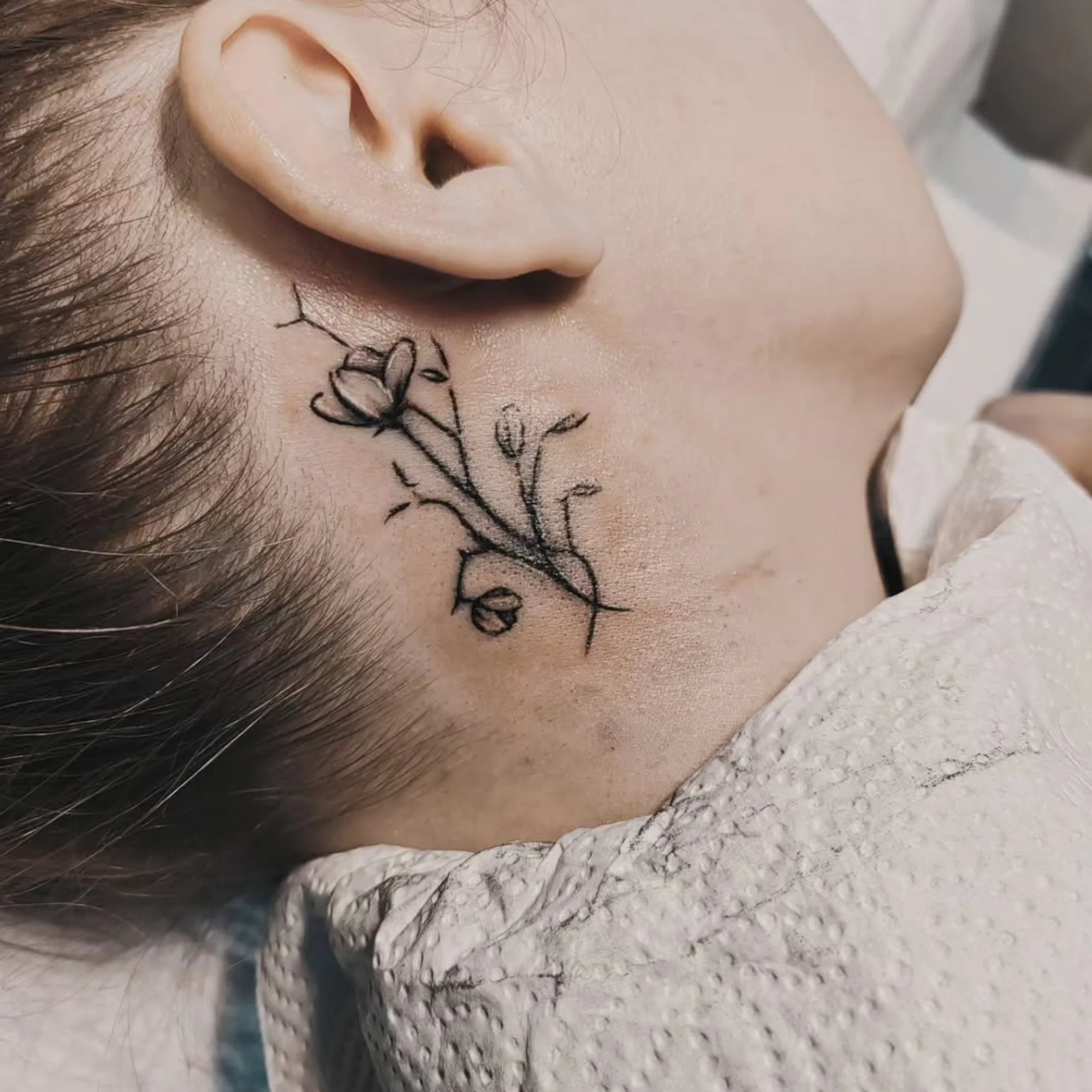
Are vegan synthetic inks the safer option for an eyeliner, lip or brow tattoo? Only if the product is well documented with clear labelling and sterile packaging and the technician is on top of infection control; otherwise, no. People make the mistake of thinking “vegan tattoo ink ingredients” are without risk. You might as well think any dirt track is sound because it is off a sealed road.
Then there is the matter of skin prep, equipment, aftercare and underlying health. Or whether the ink has in it heavy metals, shellac, azo-derived pigments or carrier ingredients of a dubious sort.
What Is Meant By Vegan And Synthetic
Manufacturers will put out a line of PMU or tattoo products and call them vegan synthetic inks when they have eschewed animal testing and anything derived from animals. For the most part you will not see gelatin-based additives, bone char, animal glycerin or shellac, though one brand’s formula is not another’s.
And synthetic is not to be taken in the pejorative sense. It is simply that the pigments or carriers have been produced by industrial chemistry as opposed to being of animal origin. When comparing the two, the issue is really one of purity and stability and disclosure, not so much natural against synthetic.
On Pigments And Carriers
You will find two things in most PMU inks: the pigment for the colour and a carrier to suspend it and ensure it is implanted in the skin in an even manner as it flows through the device. The carrier solution could be a solvent like witch hazel or alcohol, water, a stabiliser or glycerin. If the brand is touting its vegan credentials, check the spec sheet to see if the glycerin is non-animal. That is more telling than any marketing copy.
PMU Versus Body Ink
The inks used for cosmetic tattoos are put together for the finer work on the face and for colour correction and softer fading. The safety considerations with PMU colorants, particularly with iron oxides or titanium dioxide and the way thin facial skin heals, are not the same as with a body tattoo. A lip is more vascular than a brow which requires undertone management, and an eyeliner is right up against the eye. They are not the same thing and ink safety should be treated as such.
Ingredients To Examine
Here is where you will find the substance of the matter. Being vegan is fine but it is the scrutiny of the ingredients that makes for a good decision rather than a blind one. You want to avoid undisclosed additives or sensitising preservatives.
In my time looking into cosmetic tattoo safety for friends I was often asked about the pain, the colour, the shape. Not the bottle. As it should be, the result is what is noticed. The chemistry is left to the background until it all goes pear-shaped.
Red Flags
In the matter of consumer safety, the presence of heavy metals in the ink is a prime concern. Be it in the raw materials as trace contamination or an intentional part of the pigment in some cases. You will find nickel, chromium, cobalt, lead, arsenic, cadmium, mercury and antimony in most conversations about metals, but the extent of their presence and how concentrated they are is another matter, depending on the product and batch.
Then there are pigments. Azo compounds in particular have a way of degrading into aromatic amines with time; some of these by-products are carcinogenic in nature. Not all azo pigments are to be considered unsafe for that reason, yet one would do well to be sceptical of any blanket “non-toxic” tattoo ink claims from a brand unless there is testing and compliance to put to it.
Animal-Derived Additives To Steer Clear Of
Those intent on cruelty-free alternatives should be on the lookout for shellac, gelatin, glycerin of animal origin or colour additives that have their roots in insects or animal by-products. While a vegan formula ought to leave those out, it is not always made plain in a company’s marketing.
When an ingredient list is not forthcoming, put in a request for the sterilisation statement, technical data and safety data sheet. Should a supplier or technician be unable to account for what is in the bottle, do not take “trade secrets” for an answer. It is a sign to hold off.
What Research Actually Shows
The body of evidence on the safety of tattoo inks is expanding if not yet perfect. One can point to short-term risks that are known, longer-term ones that are suspected and gaps in the data. An honest assessment is that safety is a spectrum determined by the quality of ingredients, how they are applied and individual biology; to say inks are either perfectly safe or wholly dangerous is misleading.
Scientific literature is full of reviews, in MDPI indexed journals for instance, covering everything from pigment impurities and inflammatory responses to contamination and the case for more oversight. The research is not saying every ink is bad, but it does make a compelling argument for caution where PMU colorants are concerned and for better labelling of ink ingredients.
Risks Identified In Studies
Several things come up again and again in the research on PMU and tattoo inks: allergic and granulomatous reactions, microorganisms contaminating the work, photo-reactive changes in a pigment, or particles making their way from the tattoo. Some studies have even turned up tattoo pigment in regional lymph nodes, lending weight to worries over ink migrating through the bloodstream or systemically, whatever the health import of that may be as yet.
For client and technician alike, the lesson is that no immediate irritation is no guarantee of long-term harmlessness. Reactions can be late in coming, after sun or laser removal or a top-up.
The Statistics
| Issue | What is commonly reported | Practical Meaning |
| Allergic/Inflammatory | Case reports and reviews are replete with them, red pigments in particular | A patch test and review of ingredients is called for, in corrective work and on the lips |
| Pigment Migration | Particles show up in lymph nodes and elsewhere | To think the ink is exactly where you put it is not accurate |
| Contamination | International surveys of tattoo ink have noted microbial issues | Insist on sterile packaging and single-use |
| Heavy Metal | Some inks have been found with trace amounts | Do not be swayed by a label that looks clean, ask for the papers |
Consumers in Australia have the option of official public health guidance to check on infection risk. Healthdirect in its advice on tattoo and piercing safety puts it plainly: infection and allergy are recognised risks and one needs a hygienic, licensed operator. This bears directly on cosmetic tattooing since PMU is implanting pigment into broken skin which can get infected.
How Harm Comes About
It is usually a very practical affair. The source of trouble may be the environment, the needle, the bottle, the skin barrier or aftercare that has been neglected. There is no need for it to be dramatic.
Where people expect a simple yes or no on safety, the reality is more akin to a series of gates. Fail at one of them with contaminated ink or a dirty setup and it can go wrong in a hurry.
Infection And Cross-Contamination
Compromised sterile packaging or non-sterile ink allows microorganisms in. Factor in a lack of hand hygiene, a reused cap or a contaminated surface and a local infection is only a step away. Here the technician is all important. A safe bottle means nothing in a grubby set up.
Allergy And Delayed Reactions
One can have a swift onset of contact dermatitis, or an ink allergy may put in an appearance at a later date. The likes of fragrances and preservatives, metals and certain pigments are all culprits. Some redness is to be anticipated following the procedure, but swelling, blisters, a rash that will not stay put or an itch that lingers are something else altogether.
It is a common misconception that because one has had a tattoo on the body before they will have no trouble with PMU. Yet the outcome is not the same when you have different carriers and pigments and a different site to contend with.
Systemic Movement Of Pigment
There is talk among consumers of ink making its way into the bloodstream. In the literature it is more accurately described as movement through the tissue and lymphatic system than “all the ink goes into the blood”. Be that as it may, small particles can get into the lymphatic circulation and travel from where they were placed. The fact is pigments are not invariably fixed in place for good, which is why one should insist on full transparency as to what is in them.
Rules And Labelling In Australia
Navigating cosmetic tattoo ink regulations in this country can be bewildering given the number of overlapping systems: from chemical regulation and product import oversight to consumer law, infection control and the rules for practitioners and premises. Do not expect a national gold stamp to cover every eventuality for a bottle of PMU.
People are apt to think that if it is available in Australia it has been properly vetted for use on the face. It is not the same thing.
A Local Check
Find out if the practitioner is up to scratch with state or territory skin penetration rules and what sort of infection control training is in evidence. See if they have batch records on file for their inks; useful in the event of a recall or reaction. As for the product, request the lot number, expiry, sterility statement and ingredient list, and confirm the bottle is sealed for professional use. One should not have to work hard to get details on the ink.
Matters Of Documentation
- Safety data sheets, an ingredient disclosure, and a record of the sterilisation method or packaging
- Evidence of quality controls by the manufacturer and testing for contamination
- Plain advice on the carriers and pigments (non-animal glycerin for instance)
Then there are the brand names that come up in any conversation about tattoos: Intenze, Living Safe, Eternal Ink, Dynamic Color, StarBrite Colors, Custom Irons, Snow Tattoo, Kaleidoscope. But a name does not vouch for the safety of the current batch or its fitness for PMU. Formulas and distributors have a way of changing. Put aside the reputation of the brand from three years back and check the bottle in question.
Making A Safer Choice
No chemistry degree is required to be sensible, though the questions put to a technician should be more pointed than “Is it vegan?” The best course is to have the technician lay out what he or she uses and the trade-offs involved without fuss. When it comes to permanent makeup ink safety it is very personal. A low-maintenance brow is all well and good until a case of inflammation has you put out for months. Best to be particular now and avoid the aggravation down the track.
Vetting At A Glance
| What To Check | Safer Sign | Warning Sign |
| Ingredient Transparency | Allergens and formula discussed openly | “Proprietary blend” and little else |
| Sterility | Single-use caps, sterile packaging, a sealed bottle | Decanting with no hygiene, open bottles |
| Testing | Manufacturer quality docs and batch records | Nothing on paper |
| Consultation | Aftercare and medical history covered | No screening for contraindications, booking is rushed |
| Marketing Claims | Limits are explained in measured terms | Promises of “zero-risk” or 100% non-toxic |
For Whom
Clients who are particular about sourcing and want to shun animal-derived additives will find vegan inks to their liking. Not everyone is so suited to them, particularly where there is a record of eczema on the face, severe allergies, autoimmune issues or a past reaction to a tattoo. If your practitioner cannot produce the right papers, hold off and take medical counsel.
The Breastfeeding Question
When it comes to mums who are breastfeeding, the approach is more caution than panic. The uncertainty is significant given the paucity of high-quality evidence on PMU in these circumstances. One has to consider the pain and stress, the aftercare products, the risk of an inflammatory response or infection and what little we know of how pigment exposure and lactation interact. When it comes to safe inks for a breastfeeding mother and the options you might want to put side by side, put that conversation to your GP as well as the cosmetic tattooist. Make a point of inquiring into the timing and any alternatives should one be able to put off the procedure for a while; do not forget to get specifics on sterility, patch testing and the like. And for those doing their homework on ink types, a comment on social media from an overconfident cousin in her activewear is no substitute for due diligence.
Questions Worth Asking First
Find out if the practitioner has a written consent policy and is at ease with clients who are breastfeeding. Inquire as to what aftercare products are in use. You may also want to consider if putting the procedure off would alter the risk for you. It is a conservative approach and many technicians will have you wait until feeding is well established or done with before they do an elective PMU, lip blush being a case in point, provided there are no health complications to contend with.
Aftercare That Lowers Trouble
There is nothing glamorous about aftercare yet outcomes are made or broken there. To put good money on a PMU and then be lax with the healing instructions is akin to leaving a fine car under a gum tree in hail season and making the best of it.
Heed the directions to keep things clean and dry, do not pick at it and stay away from ointments you have not been given the nod for. Let the technician be the one to tell you when you can go back to makeup or the pool; until then shield the skin from sun and sweat. Should something not look right, make a move of it early.
What To Ask Before Booking
- “Can I put my eye on the bottle and batch number of the ink you intend to use?”
- “Are we talking vegan and cruelty-free pigments with no animal-derived shellac or glycerin?”
- “How do you preclude contamination in your setup and what is your track record with client reactions and how you handle them?”
- “And if I were to have swelling or a rash or fever post treatment, what is the course of action?”
If your schedule allows but a day to put this in order, make the consultation your priority, not the procedure. Have a look at the paperwork, talk through your medical history and allow yourself some time to cool off. Cosmetic tattooing is not to be fitted in between a brunch and an errand to the post office.
A word from Beatrice Hollowbrook
The bottom line is that safety with vegan cosmetic tattoo ink is not a matter of slapping on a badge. A synthetic vegan ink can be the better option at times, but only if it is well documented, labelled and sterile and the technician has the hygiene standards and sense to put his foot down and say “not today” over anything risky.
Then again, all you need to remember is to ask for the product details. Not the sales pitch or the branding or whatever vibe is being put on. The ingredients, the plan for contingencies, the bottle and the batch. Calm and sensible safety is to be found there.
Frequently Asked Questions
Is Cosmetic Tattooing Safe?
Reasonably so, in the hands of a trained professional who works with sound aftercare protocols, equipment that is sterile and inks that are on the record. There are risks none the less: infection, an allergic response, colour that does not turn out as planned or inflammation that is slow to show.
Can Tattoo Ink Enter Your Bloodstream?
Some pigment particles will travel from where they were put in and have been found in lymph nodes according to studies. Tissue and lymphatic migration is the more credible account of it than a simple all or nothing affair with the bloodstream, but in any event localisation is not absolute.
Which Tattoo Ink Is Non-Carcinogenic?
You will not get a straight promise from any decent practitioner that an ink is non-carcinogenic under every condition. Some have a lower risk profile by way of testing and composition but such sweeping claims are not to be believed. Put in for the data on impurities and pigments.
Do Most Tattoo Shops Use Vegan Ink?
Not of necessity. While you will find studios with some vegan synthetic inks in stock, it is a matter of the artist, the supplier and the shop. Do not make assumptions, ask for the particulars.
Does Vegan Mean Better For Sensitive Skin?
Not of itself. The term merely means the formula is without animal derivatives; it is no assurance you will be free of contaminants, metals or sensitising preservatives. Any decision for sensitive skin has to rest on the ink as a whole and one’s own history.
Further reading: ink types for breastfeeding moms.
